The situation was dire. The hurricane had flattened power lines, flooded substations, and left entire communities without electricity for weeks. Hospitals were running on backup generators of limited capacity, water treatment plants were inoperative, and communication networks were down. The local government and international aid agencies needed immediate, mobile, and robust power sources to support the life-saving and recovery operations.
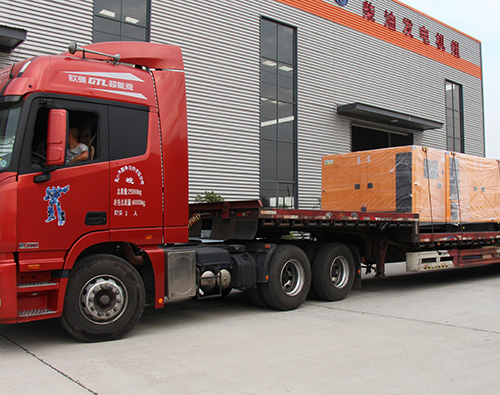
Responding to an urgent procurement order from an international relief organization, Jiangsu Kaichen activated its emergency response protocol. Within 72 hours, the company had mobilized a fleet of twelve trailer-mounted diesel generator sets from its ready-to-ship inventory. The units ranged in size from 100kVA to 500kVA, chosen for their versatility and ease of deployment.
"Speed and flexibility were the absolute priorities," stated Mr. Chen, Director of International Sales at Jiangsu Kaichen. "Our trailer-mounted units are designed for this exact scenario. They are self-contained, pre-wired, and can be towed directly to a site by a standard truck, hooked up, and be producing power within minutes of arrival. There's no time for complex civil works or installation in a disaster zone."
The fleet was airlifted and shipped via expedited freight to the affected region. A dedicated team of five Kaichen field service engineers accompanied the equipment, their mission to deploy, commission, and oversee the operation of the generators at multiple key locations.
The generators were strategically deployed to create pockets of resilience amidst the chaos. Two 500kVA units were installed at a regional hospital, allowing it to restore full surgical capabilities and preserve refrigerated medicines. Several smaller units were sent to set up emergency communication hubs, enabling first responders to coordinate and allowing residents to contact loved ones. Perhaps most critically, a 400kVA generator was used to power a temporary water purification plant, restoring access to clean drinking water for thousands of people.
"The most challenging aspect was the dynamic and often chaotic environment," recounted one of the Kaichen engineers on the ground. "We were setting up a generator one day at a makeshift shelter, and the next day we'd be moving it to a new location as needs evolved. Our equipment had to be incredibly robust and simple to operate, as local technicians were quickly trained to perform basic checks and refueling."
Beyond just providing hardware, Jiangsu Kaichen's team provided invaluable technical support and training. They worked tirelessly alongside relief workers, often in difficult conditions with limited rest, to ensure the power kept flowing. The reliability of the Kaichen generators, known for their strong motor starting capability and stable voltage output, was crucial for powering sensitive medical equipment and communication devices.
This mission highlights a different, yet equally important, dimension of Jiangsu Kaichen's overseas project implementation: disaster response and social responsibility. The project was not about long-term industrial output, but about saving lives, alleviating suffering, and laying the groundwork for rebuilding.
The images and reports from the Caribbean, showing Kaichen's distinctive blue generators humming reliably outside hospitals and community centers, have resonated deeply within the company. This effort has reinforced the understanding that the technology and expertise developed for industrial applications can have a profound humanitarian impact.
For governments and aid organizations worldwide, the successful and rapid response by Jiangsu Kaichen serves as a compelling case study. It proves that having reliable partners with ready-to-deploy, mobile power assets is an essential component of modern disaster preparedness and international cooperation. For Jiangsu Kaichen, it is a proud chapter in its history, demonstrating that its power extends far beyond the factory floor, bringing light and hope when they are needed most.