The mining site, located hundreds of kilometers from the nearest established infrastructure, presented a unique set of challenges. The total absence of a grid connection meant the power plant would be the mine's sole source of electricity, 24 hours a day, 7 days a week. The equipment would have to withstand high ambient temperatures, pervasive dust, and high humidity. Furthermore, the logistics of delivering diesel fuel to the site were complex and expensive, making fuel efficiency a paramount concern for the mine's operational economics.
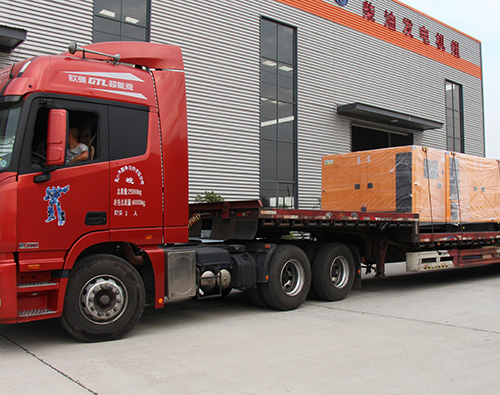
Jiangsu Kaichen's solution was a fully integrated, turnkey power station built around six of its high-performance KC-2000GF 2MW diesel generator sets. However, the standard open-skid units would not suffice. Each generator was meticulously housed in a custom-designed, 40-foot sound-attenuated and weather-proofed container.
"Off-the-shelf solutions fail in environments like this," commented Mr. Liu, Kaichen's Head of Engineering for Special Projects. "Our containerized design is a fortress for the core equipment. It provides critical protection from the abrasive dust that can destroy an engine, incorporates heavy-duty ventilation and cooling systems to combat the heat, and significantly reduces acoustic emissions, creating a better working environment for the site personnel. This 'plug-and-play' modular approach also drastically reduced on-site assembly time and complexity, which is a massive advantage in a remote location with limited skilled labor."
The most innovative aspect of this project was the integration of a sophisticated fuel management system. Given the high cost of fuel transport, simply running the generators at full tilt was not economically sustainable. Kaichen's engineers implemented a dynamic load management system that synchronizes the operation of the six units with the mine's variable power demand.
During periods of lower demand, such as during shift changes or non-processing hours, the system automatically scales down the number of operating generators, running fewer units at a higher, more efficient load factor rather than many units at a light load. This strategy alone has resulted in a documented 15% reduction in fuel consumption compared to a conventional setup.
"The fuel savings directly translate to a lower cost per ton of ore processed, which is a key performance indicator for our client," said Ms. Li, the Project Manager. "We also designed and installed an extensive fuel farm with double-walled storage tanks and a automated polishing and transfer system to ensure the fuel delivered to the engines is of the highest possible quality, further enhancing engine life and reliability."
The project's commissioning phase was a feat of precision and planning. Kaichen dispatched a core team of veteran commissioning engineers who lived on-site for two months. They oversaw the final installation, conducted rigorous performance tests under simulated load conditions, and conducted comprehensive training for the mine's maintenance crew. The training covered everything from routine maintenance procedures to advanced diagnostics using the integrated control system.
The result is a power plant that operates with remarkable autonomy and reliability. It powers the entire mining operation—from the giant crushers and conveyor belts in the processing plant to the high-tech laboratories and essential site accommodations. The mine's management has reported a significant increase in operational uptime since the Kaichen plant came online, freeing them from the constant worry of power-related stoppages.
This project in the heart of Africa is a resounding endorsement of Jiangsu Kaichen's philosophy: to engineer power solutions that are not only powerful and reliable but also intelligent and economically astute. It demonstrates a deep understanding of the total cost of ownership in remote, off-grid applications and cements the company's role as an indispensable partner for the global extractive industry.